



Queensland Crowd Controllers and Bodyguards are required to complete specified ongoing training every three years to maintain essential skills in managing conflict, controlling persons safely and providing appropriate first aid. This refresher training helps security personnel maintain current practical skills, reinforce professional responsibilities and respond effectively to challenging situations while minimising the risk of harm to themselves, patrons and others.
The required ongoing training includes CPPSEC3101 Manage conflict and security risks using negotiation, CPPSEC3121 Control persons using empty hand techniques, and either HLTAID011 Provide First Aid or HLTAID014 Provide Advanced First Aid. These requirements apply in addition to the separate annual CPR training requirement for relevant Queensland security licence holders.
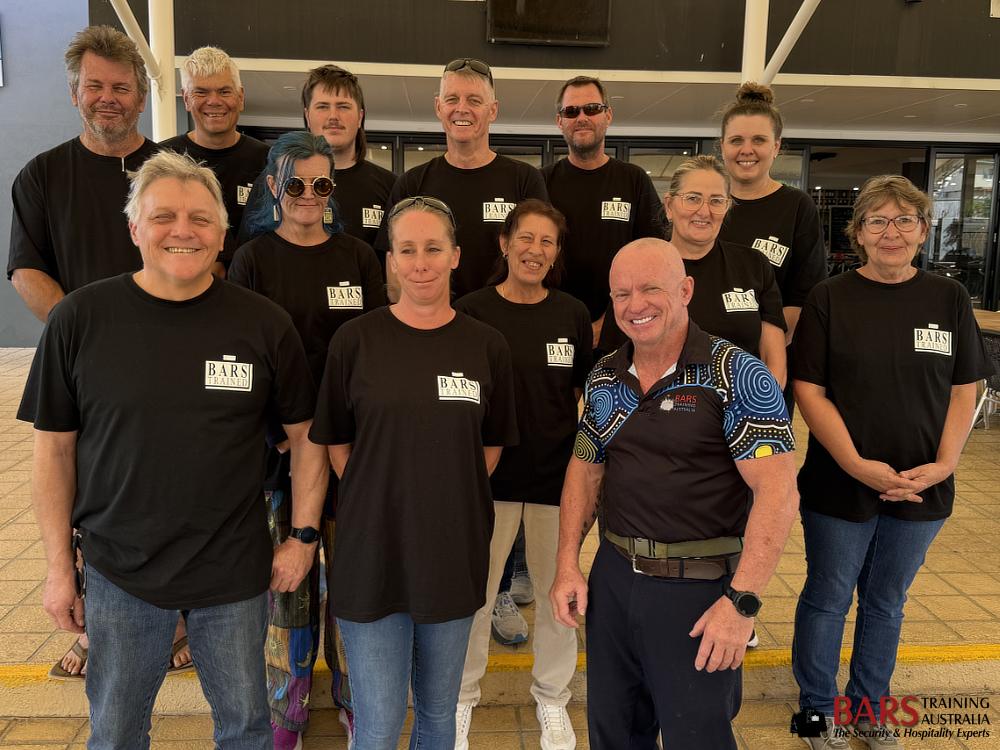
Who Should Enrol?
This course is designed for people who currently hold a Queensland security provider licence with the Crowd Controller and/or Bodyguard function and are required to complete their three-year ongoing training requirements. Queensland Crowd Controllers and Bodyguards must maintain specified competencies through ongoing training. The required three-year training comprises
- CPPSEC3101 Manage conflict and security risks using negotiation,
- CPPSEC3121 Control persons using empty hand techniques, and
- either HLTAID011 Provide First Aid or HLTAID014 Provide Advanced First Aid.
The dates by which ongoing training must be completed are provided with the security provider licence. Licence holders are responsible for completing the required training and providing the required evidence to the Queensland Office of Fair Trading within the applicable timeframe.
BARS Training Australia delivers this refresher training with a strong practical focus, providing experienced security personnel with an opportunity to refresh important conflict management, negotiation, physical control and first aid skills while meeting their ongoing training requirements.
International Students
BARS Training Australia is not registered on the Commonwealth Register of Institutions and Courses for Overseas Students (CRICOS). Overseas students studying in Australia on a student visa who are required to undertake training with a CRICOS-registered provider are therefore not eligible to enrol in this course with BARS Training Australia.

Training and Certification
BARS Training Australia (RTO No. 32061) delivers the Crowd Controller and Bodyguard refresher training using practical, industry-focused training and assessment methods designed for experienced security personnel.
The three-year ongoing training includes:
CPPSEC3101 – Manage conflict and security risks using negotiationCPPSEC3121 – Control persons using empty hand techniques
HLTAID011 – Provide First Aid
Alternatively, HLTAID014 Provide Advanced First Aid may satisfy the applicable three-year first aid requirement where that unit is undertaken.
Successful completion of the applicable units results in the nationally recognised certification documentation required for the competencies successfully completed.
Annual CPR Requirement
Queensland Crowd Controllers and Bodyguards are also required to refresh HLTAID009 Provide Cardiopulmonary Resuscitation every 12 months. This is a separate annual ongoing training requirement and should not be confused with the three-year refresher training requirements.
Course Fees
Course fees start from $375.
Course Application & Enrolment
To view full course details, select Course Application & Enrolment and enter your preferred training location. Available course dates, fees and location-specific information will then be displayed.

Training and Assessment
The Crowd Controller and Bodyguard refresher course is delivered through a combination of pre-course self-paced learning and two consecutive full days of compulsory face-to-face training and assessment.
Students are required to complete the prescribed pre-course learning and preparation activities before attending the face-to-face component.
Pre-Course Learning
Before attending face-to-face training, students are provided with pre-course learning materials designed to refresh underpinning knowledge and prepare them for the practical component of the course.
Students receive information about the course requirements, learning resources, assessment arrangements and available learner support.
Students who experience difficulty with the pre-course learning activities are encouraged to contact BARS Training Australia so that appropriate learner support or reasonable adjustment can be considered.
Face-to-Face Training and Assessment
Students must attend two consecutive full days of face-to-face training and assessment. The face-to-face component provides an opportunity to refresh and demonstrate the practical skills and knowledge required by the applicable units of competency.
Training and assessment activities include practical demonstrations, role-plays, simulated security scenarios, group discussions and other activities designed to reflect situations that Crowd Controllers and Bodyguards may encounter in the workplace.
Students must successfully complete the required knowledge and practical assessment activities and demonstrate competency against the requirements of each unit of competency undertaken.
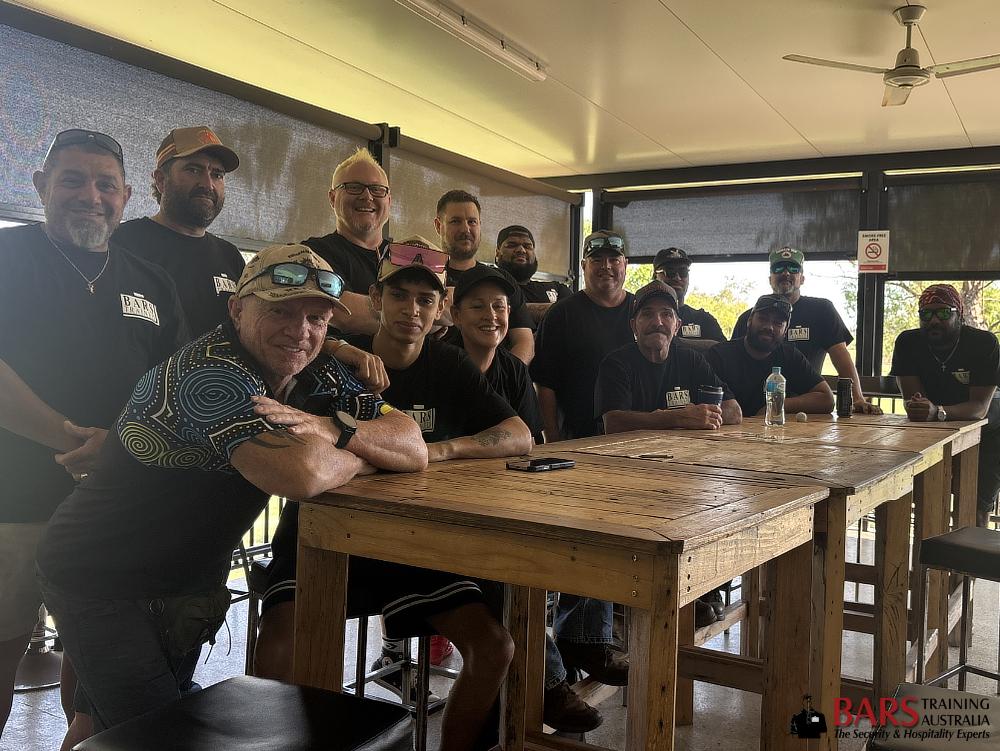
Prerequisites
This refresher training is intended for people who currently hold a Queensland security provider licence with the Crowd Controller and/or Bodyguard function and are undertaking the applicable ongoing training requirements.
Language, Literacy and Numeracy
Students require sufficient language, literacy and numeracy skills to participate effectively in the training and assessment activities. Students who experience difficulties or require additional assistance are encouraged to advise BARS Training Australia so that appropriate learner support or reasonable adjustment can be considered.
Physical and Practical Requirements
The course includes practical training and assessment activities requiring students to demonstrate skills relevant to conflict management, controlling persons using empty hand techniques and first aid. Activities include practical security scenarios, role-plays, physical techniques and responses to simulated first aid emergencies.
Students undertaking HLTAID011 Provide First Aid are required to demonstrate cardiopulmonary resuscitation (CPR) on a manikin positioned on the floor in accordance with the requirements of the unit of competency.
BARS Training Australia supports access and participation and will consider reasonable adjustment where appropriate. Reasonable adjustment cannot remove or alter an essential requirement of a unit of competency or prevent a student from demonstrating the skills and knowledge required to be assessed as competent.
Students who believe they may require support or reasonable adjustment are encouraged to discuss their individual circumstances with BARS Training Australia before commencing the course.
Recognition of Prior Learning and Credit Transfer
This course is specifically designed to meet the Queensland Office of Fair Trading requirement for licensed Crowd Controllers and Bodyguards to complete prescribed ongoing training every three years to refresh their knowledge and skills.
While Recognition of Prior Learning (RPL) and credit transfer are recognised processes within the vocational education and training system, they are not used by BARS Training Australia as a substitute for undertaking the prescribed three-year refresher training.
Students completing this course for Queensland security licensing purposes are required to participate in the applicable training and successfully complete the required assessment activities. This ensures participants actively refresh and demonstrate the knowledge and practical skills that the ongoing training requirement is intended to maintain.

Enrolment
Applicants are required to complete the BARS Training Australia online application and enrolment process before commencing the course. Before enrolment is confirmed, BARS Training Australia will provide relevant course information and undertake any required pre-enrolment checks to determine suitability for the training and identify individual learner support or reasonable adjustment needs.
Applicants will be advised when their enrolment has been confirmed and provided with the information and learning resources required to commence their training.
Refunds
Students may be entitled to a refund in accordance with the BARS Training Australia Fees, Refunds and Course Progress Policy, applicable Terms and Conditions and Australian Consumer Law.
Requests for a refund must be submitted in writing using the BARS Training Australia Refund Request Form and should include supporting information where applicable. The form can be obtained by contacting BARS Training Australia on (07) 5529 0834 during office hours.
Student Information
Before enrolling, applicants should carefully review the information provided about the course, including course requirements, fees, training and assessment arrangements, learner support, reasonable adjustment, complaints and appeals, refunds, and their rights and responsibilities.
Applicants must also read and acknowledge the current BARS Training Australia Student Handbook and applicable Terms and Conditions as part of the enrolment process.
For further information or assistance with an application, prospective students can contact BARS Training Australia or commence the online Course Application & Enrolment process. (view handbook)
Queensland Crowd Controllers and Bodyguards are required to complete CPPSEC3101 Manage conflict and security risks using negotiation and CPPSEC3121 Control persons using empty hand techniques every three years as part of their ongoing training requirements. These units maintain essential skills for managing conflict, responding to security risks and controlling persons safely while minimising the risk of harm.
The course combines knowledge and practical training in conflict management, negotiation and empty hand techniques, with participants required to demonstrate competency through relevant practical assessment activities. Both units also form part of CPP31318 Certificate III in Security Operations and may contribute towards that qualification where included as part of an approved training program.

CPPSEC3101 – Manage Conflict and Security Risks Using Negotiation
CPPSEC3101 develops the skills and knowledge required to manage conflict and security risks using appropriate negotiation techniques.
Training includes:
Reviewing and applying workplace procedures and policies, including work health and safety (WHS), to comply with legal rights and responsibilities. Maintaining situational awareness to identify and assess sources of conflict and security risk and selecting and implementing appropriate response options within the scope of the security officer’s authority.
Using effective negotiation and communication techniques to resolve conflict, minimise risk and encourage a shared approach to conflict resolution. Working with others to report, evaluate and improve responses to conflict and security risk situations.
The unit applies to security personnel working independently or under limited supervision as members of a security team and combines underpinning knowledge with practical activities relevant to contemporary security operations.

CPPSEC3121 – Control Persons Using Empty Hand Techniques
CPPSEC3121 develops the skills and knowledge required to assess threats and control persons using recognised empty hand techniques while maintaining the safety of the security officer, subject and other people.
Training includes:
Identifying threats posed by persons presenting a risk to the safety of themselves or others and assessing appropriate response and withdrawal options. Using negotiation and communication techniques to defuse conflict and provide clear spoken warnings and directions. Applying recognised empty hand techniques using the minimum amount of force necessary to remove the immediate threat, while avoiding vital areas of the body and minimising the risk of harm. Isolating subjects at a safe distance from members of the public and monitoring their safety and wellbeing following the application of control techniques.
The unit applies to security personnel working independently or under limited supervision as members of a security team and includes practical training and assessment in the safe application of appropriate control techniques.

Certification Issued
Students who successfully complete the required training and assessment will receive nationally recognised certification documentation for:
- CPPSEC3101 – Manage conflict and security risks using negotiation
- CPPSEC3121 – Control persons using empty hand techniques
Queensland Ongoing Training Requirements
CPPSEC3101 and CPPSEC3121 form part of the prescribed three-year ongoing training requirements for Queensland security provider licence holders performing Crowd Controller and Bodyguard functions.
These units are undertaken to refresh and maintain important conflict management, negotiation, risk assessment and physical control skills. They form part of the ongoing training requirements in addition to the applicable first aid training required every three years and the separate annual CPR requirement.
Course Fees
Course fees start from $250.
Course Application & Enrolment
To view full course details, select Course Application & Enrolment and enter your preferred training location. Available course dates, fees and location-specific information will then be displayed. To view the full details of the course please click on “Course Application & Enrolment” below and enter the location. You will be able see all course information as well as choose the best course dates that suit your personal circumstances.

Training and Assessment
CPPSEC3101 Manage conflict and security risks using negotiation and CPPSEC3121 Control persons using empty hand techniques are delivered through a combination of pre-course self-paced learning and one full day of compulsory face-to-face training and assessment. Students are required to complete the prescribed pre-course learning and preparation activities before attending the face-to-face component.
Pre-Course Learning
Before attending face-to-face training, students are provided with pre-course learning materials designed to refresh underpinning knowledge and prepare them for the practical component of the course. Students receive information about course requirements, learning resources, assessment arrangements and available learner support. Students who experience difficulty with the pre-course learning activities are encouraged to contact BARS Training Australia so that appropriate learner support or reasonable adjustment can be considered.
Face-to-Face Training and Assessment
Students must attend one full day of face-to-face training and assessment. The face-to-face component provides participants with the opportunity to refresh, practise and demonstrate the conflict management, negotiation and empty hand control skills required by the units of competency. Training and assessment activities include practical demonstrations, role-plays, simulated security scenarios, group discussions and other activities relevant to situations that security personnel may encounter in the workplace. Students must successfully complete the required knowledge and practical assessment activities and demonstrate competency against the requirements of both units of competency.

Prerequisites
This course is intended for security personnel undertaking CPPSEC3101 Manage conflict and security risks using negotiation and CPPSEC3121 Control persons using empty hand techniques, including Queensland Crowd Controllers and Bodyguards completing their prescribed three-year ongoing training requirements.
Language, Literacy and Numeracy
Students require sufficient language, literacy and numeracy skills to participate effectively in the training and assessment activities. As part of the pre-enrolment process, BARS Training Australia may assess these skills where required to determine suitability for the course and identify any learner support or reasonable adjustment that may be needed.
Students who experience difficulties or require additional assistance are encouraged to advise BARS Training Australia before or during their training so that appropriate learner support or reasonable adjustment can be considered.
Physical and Practical Requirements
The course includes practical training and assessment activities requiring students to demonstrate skills in managing conflict, responding to security risks and controlling persons using empty hand techniques. Activities include role-plays, simulated security scenarios, negotiation exercises and the practical application of physical control techniques.
BARS Training Australia supports access and participation and will consider reasonable adjustment where appropriate. Reasonable adjustment cannot remove or alter an essential requirement of a unit of competency or prevent a student from demonstrating the skills and knowledge required to be assessed as competent.
Students who believe they may require support or reasonable adjustment are encouraged to discuss their individual circumstances with BARS Training Australia before commencing the course.
Recognition of Prior Learning and Credit Transfer
Where this course is undertaken to meet the Queensland Office of Fair Trading requirement for licensed Crowd Controllers and Bodyguards to complete prescribed ongoing training every three years, BARS Training Australia requires students to undertake the applicable refresher training and assessment.
While Recognition of Prior Learning (RPL) and credit transfer are recognised processes within the vocational education and training system, they are not used by BARS Training Australia as a substitute for undertaking the prescribed three-year refresher training.
This approach ensures participants actively refresh and demonstrate the conflict management, negotiation and practical control skills that the ongoing training requirement is intended to maintain.

Enrolment
Applicants are required to complete the BARS Training Australia online application and enrolment process before commencing the course. Before enrolment is confirmed, BARS Training Australia will provide relevant course information and undertake any required pre-enrolment checks to determine suitability for the training and identify individual learner support or reasonable adjustment needs. Applicants will be advised when their enrolment has been confirmed and provided with the information and learning resources required to commence their training.
Refunds
Students may be entitled to a refund in accordance with the BARS Training Australia Fees, Refunds and Course Progress Policy, applicable Terms and Conditions and Australian Consumer Law. Requests for a refund must be submitted in writing using the BARS Training Australia Refund Request Form and should include supporting information where applicable. The form can be obtained by contacting BARS Training Australia on (07) 5529 0834 during office hours.
Student Information
Before enrolling, applicants should carefully review the information provided about the course, including course requirements, fees, training and assessment arrangements, learner support, reasonable adjustment, complaints and appeals, refunds, and their rights and responsibilities. Applicants must also read and acknowledge the current BARS Training Australia Student Handbook and applicable Terms and Conditions as part of the enrolment process. (view handbook) For further information or assistance with an application, prospective students can contact BARS Training Australia or commence the online Course Application & Enrolment process.

PPSEC3101 Manage conflict and security risks using negotiation develops the skills and knowledge required to identify, assess and respond effectively to conflict and security risk situations using appropriate communication and negotiation strategies. Queensland Crowd Controllers and Bodyguards are required to complete this unit every three years as part of their prescribed ongoing training requirements.
The course focuses on recognising conflict, assessing security risks, selecting appropriate responses and applying communication and negotiation techniques to manage situations safely while minimising the risk of harm. CPPSEC3101 also forms part of CPP31318 Certificate III in Security Operations and may contribute towards that qualification where included as part of an approved training program.

CPPSEC3101 – Manage Conflict and Security Risks Using Negotiation
CPPSEC3101 develops the skills and knowledge required to manage conflict and security risks using appropriate negotiation techniques.
Training includes:
Reviewing and applying workplace procedures and policies, including work health and safety (WHS), to comply with legal rights and responsibilities. Maintaining situational awareness to identify and assess sources of conflict and security risk and selecting and implementing appropriate response options within the scope of the security officer’s authority. Using effective negotiation and communication techniques to resolve conflict, minimise risk and encourage a shared approach to conflict resolution. Working with others to report, evaluate and improve responses to conflict and security risk situations.
The unit applies to security personnel working independently or under limited supervision as members of a security team and combines underpinning knowledge with practical activities relevant to contemporary security operations.
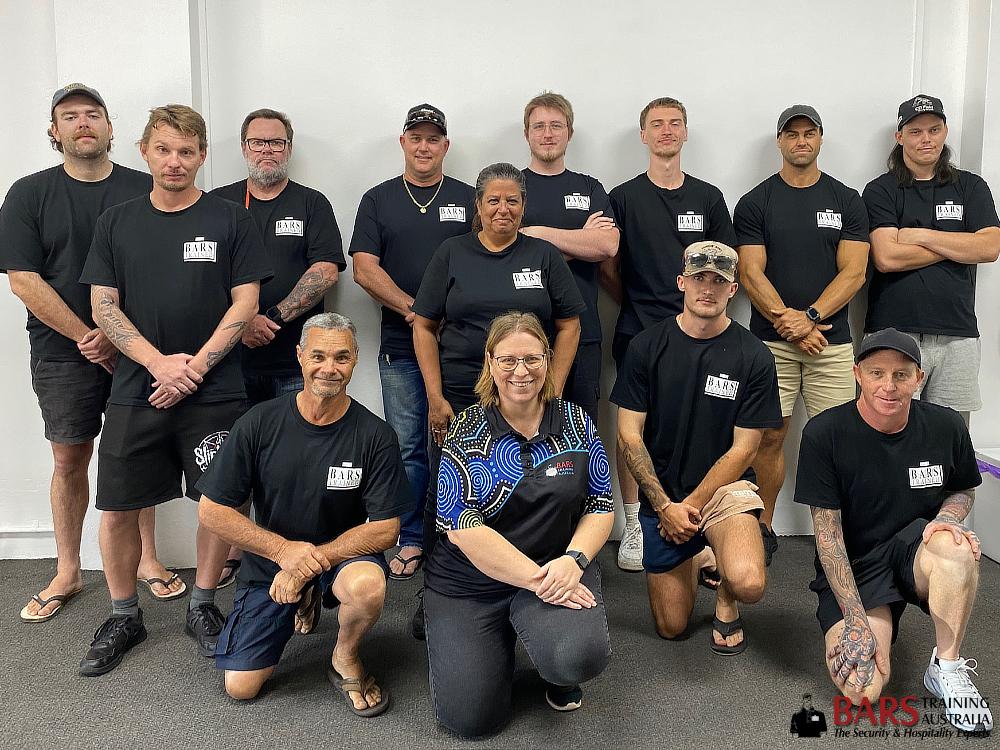
Certification Issued
Students who successfully complete the required training and assessment will receive nationally recognised certification documentation for: CPPSEC3101 – Manage conflict and security risks using negotiation
Queensland Ongoing Training Requirements
CPPSEC3101 forms part of the prescribed three-year ongoing training requirements for Queensland security provider licence holders performing Crowd Controller and Bodyguard functions. The unit is undertaken to refresh and maintain important conflict management, negotiation and security risk assessment skills. CPPSEC3121 Control persons using empty hand techniques and the applicable first aid training are also required as part of the three-year ongoing training requirements. A separate annual CPR requirement also applies.
Course Fees
Course fees start from $150.
Course Application & Enrolment
To view full course details, select Course Application & Enrolment and enter your preferred training location. Available course dates, fees and location-specific information will then be displayed.

Training and Assessment
CPPSEC3101 Manage conflict and security risks using negotiation is delivered through a combination of pre-course self-paced learning and approximately five hours of compulsory face-to-face training and assessment. Students are required to complete the prescribed pre-course learning and preparation activities before attending the face-to-face component.
Pre-Course Learning
Before attending face-to-face training, students are provided with pre-course learning materials designed to refresh underpinning knowledge and prepare them for the practical component of the course. Students receive information about course requirements, learning resources, assessment arrangements and available learner support. Students who experience difficulty with the pre-course learning activities are encouraged to contact BARS Training Australia so that appropriate learner support or reasonable adjustment can be considered.
Face-to-Face Training and Assessment
Students must attend approximately five hours of face-to-face training and assessment. The face-to-face component provides participants with the opportunity to refresh, practise and demonstrate the conflict management, risk assessment, communication and negotiation skills required by the unit of competency. Training and assessment activities include practical demonstrations, role-plays, simulated security scenarios, group discussions and other activities relevant to conflict and security risk situations that security personnel may encounter in the workplace. Students must successfully complete the required knowledge and practical assessment activities and demonstrate competency against the requirements of CPPSEC3101.

Prerequisites
This course is intended for security personnel undertaking CPPSEC3101 Manage conflict and security risks using negotiation, including Queensland Crowd Controllers and Bodyguards completing this unit as part of their prescribed three-year ongoing training requirements.
Language, Literacy and Numeracy
Students require sufficient language, literacy and numeracy skills to participate effectively in the training and assessment activities. As part of the pre-enrolment process, BARS Training Australia may assess these skills where required to determine suitability for the course and identify any learner support or reasonable adjustment that may be needed.
Students who experience difficulties or require additional assistance are encouraged to advise BARS Training Australia before or during their training so that appropriate learner support or reasonable adjustment can be considered.
Practical Requirements
The course includes practical training and assessment activities requiring students to demonstrate skills in identifying and assessing conflict and security risks, communicating effectively and using negotiation techniques to manage conflict. Activities include role-plays, simulated security scenarios, negotiation exercises and other practical activities relevant to situations that security personnel may encounter in the workplace.
BARS Training Australia supports access and participation and will consider reasonable adjustment where appropriate. Reasonable adjustment cannot remove or alter an essential requirement of the unit of competency or prevent a student from demonstrating the skills and knowledge required to be assessed as competent. Students who believe they may require support or reasonable adjustment are encouraged to discuss their individual circumstances with BARS Training Australia before commencing the course.
Recognition of Prior Learning and Credit Transfer
Where CPPSEC3101 is undertaken to meet the Queensland Office of Fair Trading requirement for licensed Crowd Controllers and Bodyguards to complete prescribed ongoing training every three years, BARS Training Australia requires students to undertake the applicable refresher training and assessment. While Recognition of Prior Learning (RPL) and credit transfer are recognised processes within the vocational education and training system, they are not used by BARS Training Australia as a substitute for undertaking the prescribed three-year refresher training. This approach ensures participants actively refresh and demonstrate the conflict management, risk assessment, communication and negotiation skills that the ongoing training requirement is intended to maintain.

Enrolment
Applicants are required to complete the BARS Training Australia online application and enrolment process before commencing the course. Before enrolment is confirmed, BARS Training Australia will provide relevant course information and undertake any required pre-enrolment checks to determine suitability for the training and identify individual learner support or reasonable adjustment needs.
Applicants will be advised when their enrolment has been confirmed and provided with the information and learning resources required to commence their training.
Refunds
Students may be entitled to a refund in accordance with the BARS Training Australia Fees, Refunds and Course Progress Policy, applicable Terms and Conditions and Australian Consumer Law. Requests for a refund must be submitted in writing using the BARS Training Australia Refund Request Form and should include supporting information where applicable.
The form can be obtained by contacting BARS Training Australia on (07) 5529 0834 during office hours.
Student Information
Before enrolling, applicants should carefully review the information provided about the course, including course requirements, fees, training and assessment arrangements, learner support, reasonable adjustment, complaints and appeals, refunds, and their rights and responsibilities. Applicants must also read and acknowledge the current BARS Training Australia Student Handbook and applicable Terms and Conditions as part of the enrolment process. (view handbook)
For further information or assistance with an application, prospective students can contact BARS Training Australia or commence the online Course Application & Enrolment process.
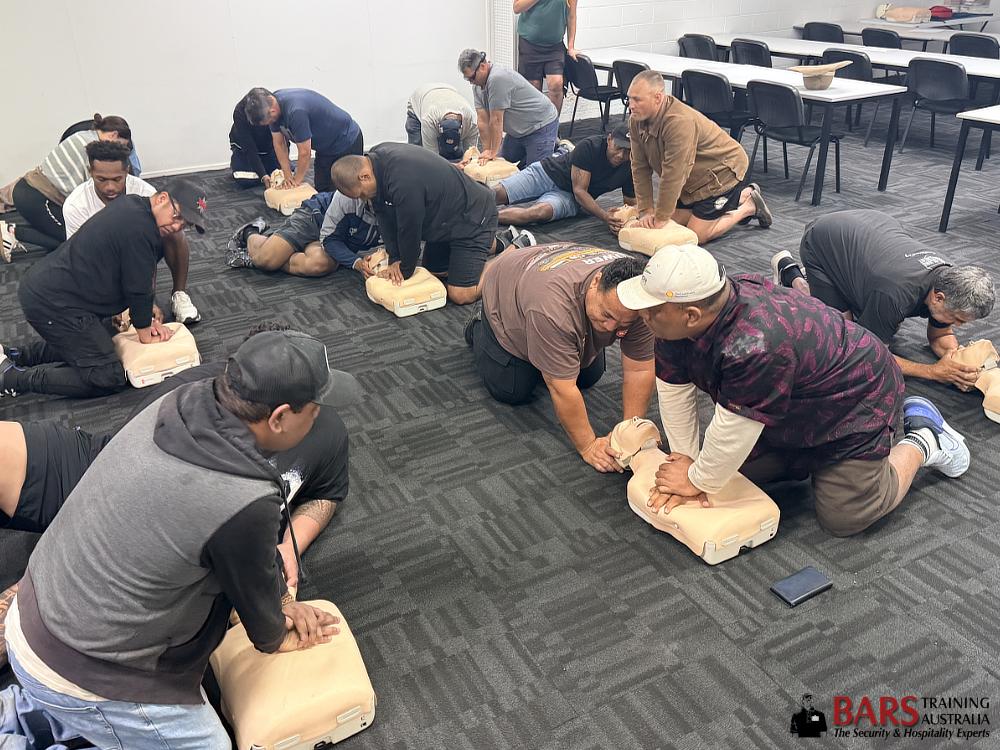
HLTAID009 Provide Cardiopulmonary Resuscitation develops the knowledge and practical skills required to recognise and respond to an unconscious casualty who is not breathing normally. Cardiopulmonary resuscitation (CPR) is an essential emergency response skill that can help maintain circulation and breathing until professional medical assistance arrives.
The course focuses on the practical application of CPR, with participants practising and demonstrating CPR using adult and infant training manikins. Training also covers responding to an emergency, accessing appropriate assistance and using an automated external defibrillator (AED). The course is conducted over approximately 3 to 4 hours and includes the practical assessment activities required to demonstrate competency.
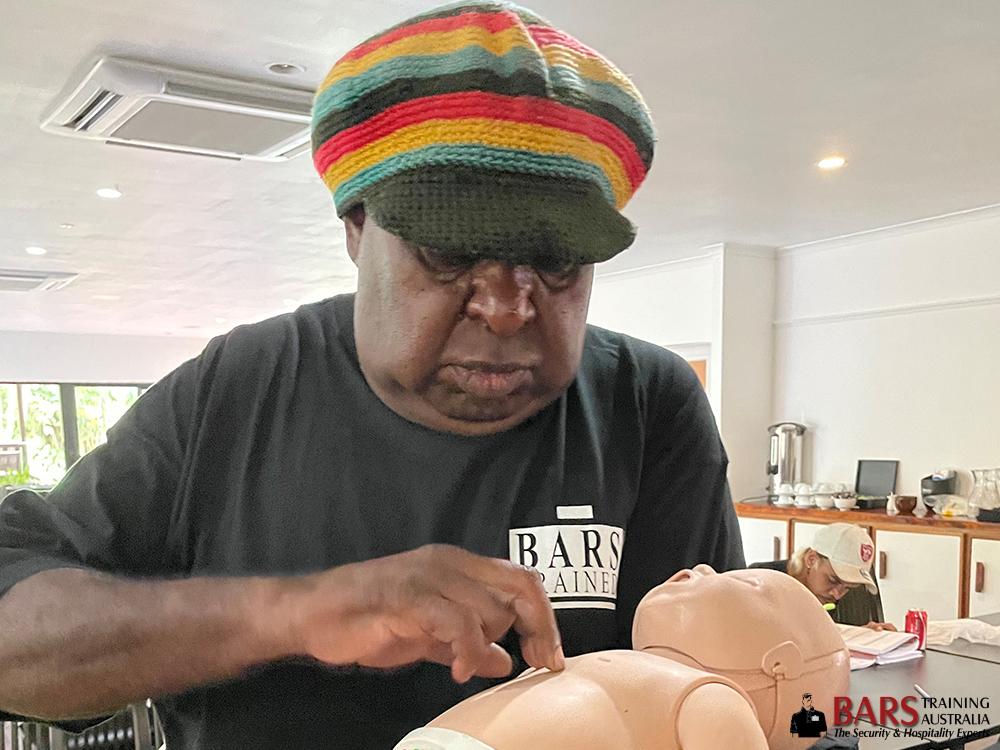
HLTAID009 Provide Cardiopulmonary Resuscitation is suitable for people who may be required to provide CPR in workplace, community or emergency situations.
The course develops the skills and knowledge required to recognise an emergency, perform cardiopulmonary resuscitation and use an automated external defibrillator (AED) in accordance with current Australian Resuscitation Council (ARC) guidelines.
The course is suitable for members of the public, workplace first aiders and people working in industries where current CPR competency is required.
This includes Queensland security industry participants who are required to maintain current CPR training as part of applicable ongoing training requirements.

Training includes the practical application of CPR techniques, responding to an emergency, accessing appropriate assistance and using an automated external defibrillator (AED).
Participants are required to complete practical CPR activities and demonstrate the required skills using appropriate training manikins and emergency response equipment.
Participants who successfully complete all training and assessment requirements will be issued a nationally recognised Statement of Attainment for:
HLTAID009 – Provide Cardiopulmonary Resuscitation
Course Fees From $60
To view full course details, select Course Application & Enrolment and enter your preferred training location. Available course dates, fees and location-specific information will then be displayed.
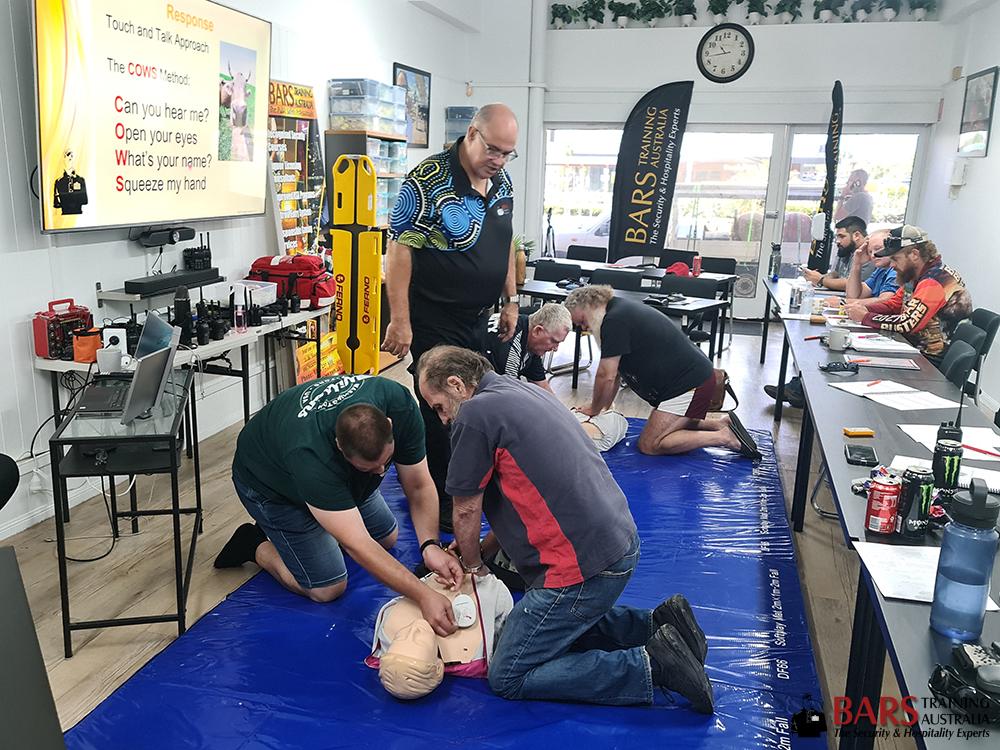
HLTAID009 Provide Cardiopulmonary Resuscitation is delivered through approximately 3 to 4 hours of face-to-face group training and assessment. Participants are required to attend and actively participate for the full duration of the course to ensure they receive the required instruction, practical training and opportunity to demonstrate competency.
During the session, participants complete the required knowledge and practical assessment activities and participate in trainer demonstrations, hands-on practical exercises, emergency response scenarios and group activities. Training provides participants with the opportunity to practise CPR techniques and the use of an automated external defibrillator (AED) in a controlled training environment before completing the required practical assessments. Participants must successfully demonstrate the knowledge and practical skills required by the unit of competency. This includes recognising and responding to an emergency situation, following appropriate emergency response procedures and demonstrating CPR using appropriate training manikins and equipment.
The practical nature of the course allows participants to develop confidence in applying CPR techniques while receiving instruction, guidance and feedback from their trainer throughout the training and assessment process.
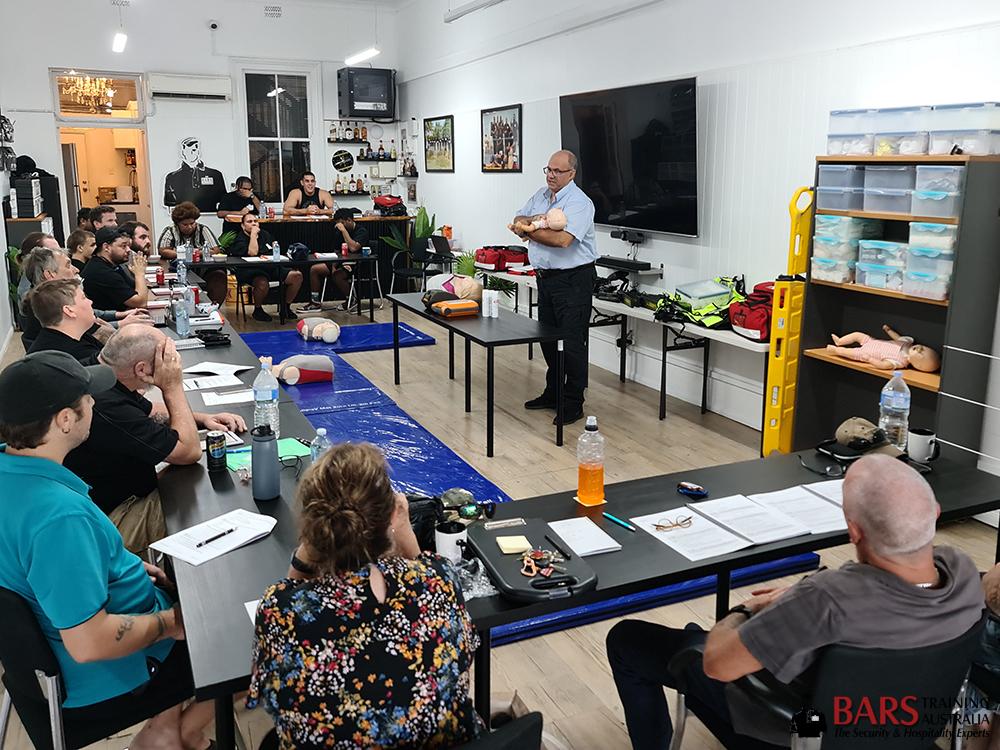
There are no formal training prerequisites for HLTAID011 Provide First Aid. BARS Training Australia requires participants to be at least 14 years of age. Participants under 18 years of age are required to provide consent from a parent or legal guardian.
Participants require sufficient language, literacy, numeracy and digital skills to complete the learning and assessment activities. BARS Training Australia assesses these requirements prior to enrolment and can provide appropriate learning support and reasonable adjustment where required.
Participants must be physically capable of demonstrating the practical requirements of the unit, including performing CPR on a manikin placed on the floor and participating in practical first aid scenarios. Reasonable adjustment will be considered where appropriate; however, adjustments cannot remove or alter the essential requirements of the unit of competency.
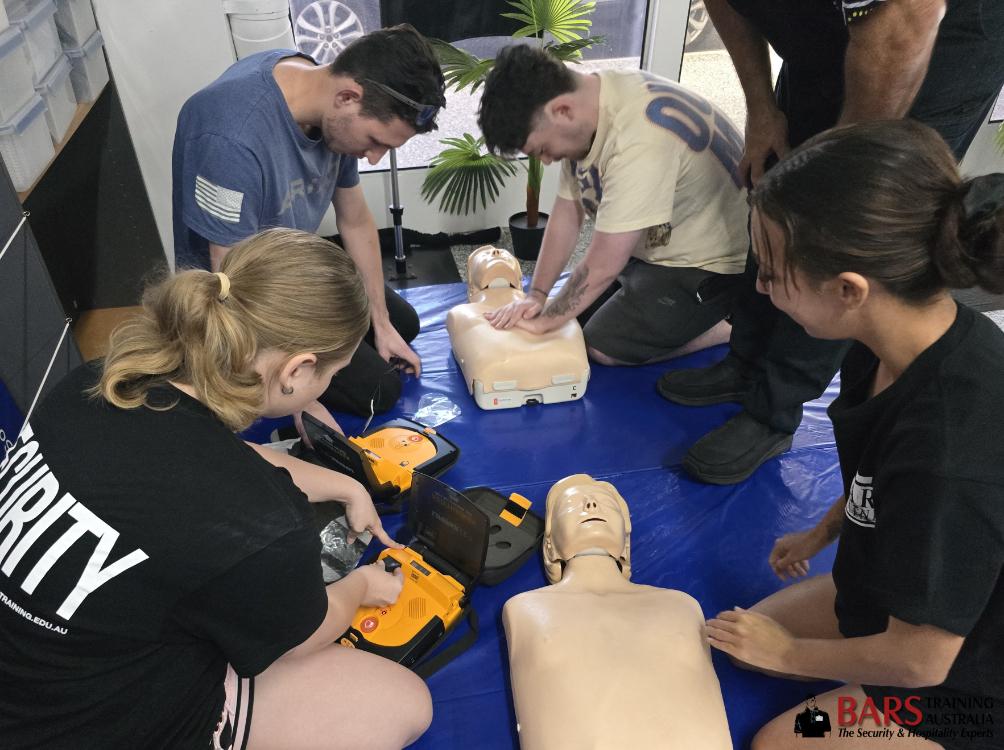
HLTAID011 Provide First Aid training is generally renewed every three years, with CPR training recommended to be refreshed every 12 months. Participants should also consider any specific workplace, industry or regulatory requirements that apply to maintaining current first aid competency.
Recognition of Prior Learning (RPL)
Recognition of Prior Learning acknowledges relevant skills and knowledge gained through previous training, employment or other experience. Participants who believe they can demonstrate the required current competency may apply for RPL.
RPL requires sufficient, valid, authentic and current evidence and is subject to assessment by BARS Training Australia. Participants can indicate their interest in RPL during the online application process or contact BARS Training Australia on (07) 5529 0834 for further information about the process and evidence requirements.

Enrolment
Applicants are required to complete the BARS Training Australia online enrolment process. Relevant course information, fees, training arrangements and participant requirements are provided before enrolment is confirmed. Student information and training and assessment outcomes are securely recorded in accordance with BARS Training Australia’s record-keeping requirements.
Refunds
Refunds are managed in accordance with the BARS Training Australia Refund Policy and applicable Terms and Conditions. Refund requests must be submitted in writing using the Refund Request Form and include supporting information where applicable.
Participants should review the course information and BARS Training Australia Student Handbook before enrolment. The Handbook provides further information about training and assessment, student support, reasonable adjustment, complaints and appeals, refunds and participant rights and responsibilities.
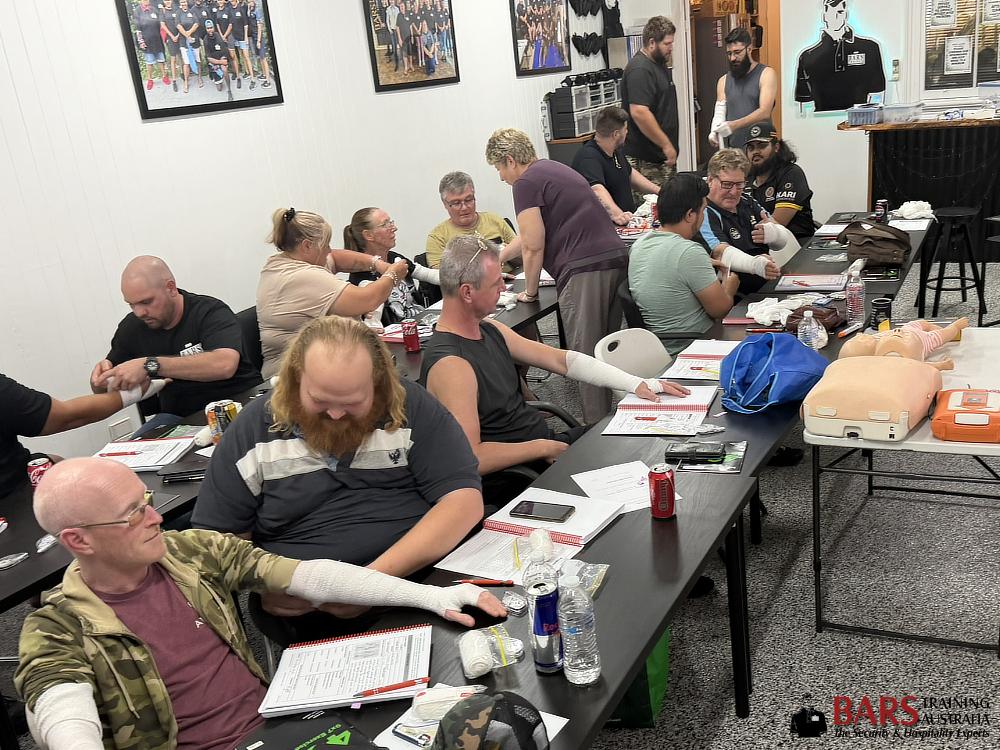
HLTAID011 Provide First Aid develops the knowledge and practical skills required to provide an effective first aid response to a person experiencing an injury or illness until professional medical assistance is available. The course covers recognising and responding to common first aid situations and the practical application of appropriate first aid procedures.
Training combines essential first aid knowledge with practical activities designed to develop confidence when responding to emergency situations. Experienced trainers provide clear, supportive and practical instruction in a professional learning environment. Participants are required to demonstrate the knowledge and practical skills necessary to respond appropriately to first aid situations in accordance with current recognised first aid procedures and guidelines.

HLTAID011 Provide First Aid is suitable for people who may be required to provide first aid in workplace, community or emergency situations.
The course is relevant across a wide range of industries and occupations, including security personnel who require current first aid competency for Queensland security licensing purposes.
Training combines first aid knowledge with practical, hands-on activities designed to develop the skills and confidence required to respond to an emergency.
Participants complete knowledge activities and take part in demonstrations, practical exercises, simulated first aid scenarios and group activities.
Training covers assessing and responding to casualties, CPR, use of an automated external defibrillator (AED), casualty management and responding appropriately until professional medical assistance is available.

Training covers a broad range of first aid situations including unconscious casualties, choking, bleeding, shock, burns, fractures and soft tissue injuries, head and spinal injuries, chest and abdominal injuries and other forms of trauma. Participants also examine medical emergencies including anaphylaxis, asthma, diabetes, seizures, heart conditions, stroke, poisoning, heat and cold emergencies, drowning and bites and stings.
Participants who successfully complete all training and assessment requirements will receive a nationally recognised Statement of Attainment for:
HLTAID009 – Provide Cardiopulmonary Resuscitation
HLTAID011 – Provide First Aid
Course Fees From $140
To view full course details, select Course Application & Enrolment and enter your preferred training location. Available course dates, fees and location-specific information will then be displayed.
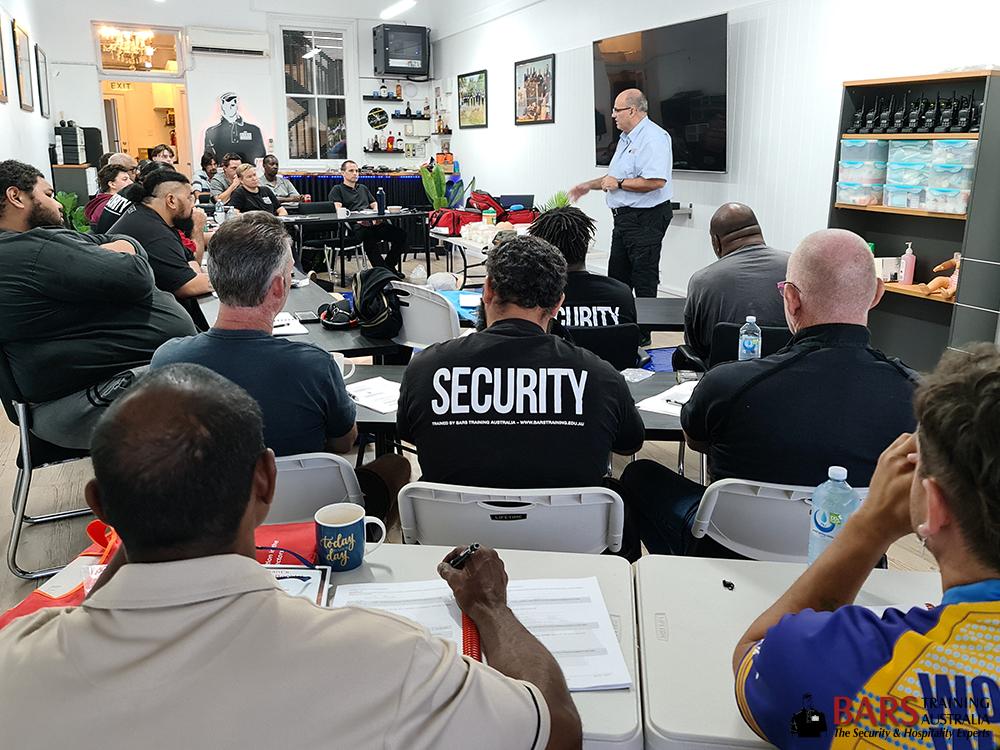
HLTAID011 Provide First Aid is delivered through a combination of pre-course self-paced learning and one full day of face-to-face practical training and assessment. Participants are provided with learning resources to complete before attending the scheduled face-to-face session, allowing them to develop the underpinning knowledge required for the practical component of the course. Pre-course learning introduces key first aid principles and provides access to relevant learning resources and study support. Participants are encouraged to contact BARS Training Australia if they experience difficulty with the pre-course material or require additional learning support or reasonable adjustment.
The face-to-face component focuses on practical first aid skills and assessment. Participants take part in trainer demonstrations, hands-on exercises, role-plays, simulated emergency scenarios and group activities designed to provide experience in responding to a range of first aid situations. Participants must successfully complete the required knowledge and practical assessment activities and demonstrate the skills required by the unit of competency, including CPR and other first aid responses using appropriate training equipment.
Note: Participants are required to complete the prescribed pre-course learning and attend one full day of face-to-face practical training and assessment.

Pre-requisites
Minimum age for participants is 14 years. Participants under the age of 18 are required to provide a consent form completed by their legal guardian.
All participants should also have basic language, literacy and numeracy skills and are required to identify if they require language, literacy and numeracy support prior to enrolment by completing a short language, literacy and numeracy examination.
Participants can also ask for language, literacy and numeracy support during the delivery if they find they are experiencing difficulties. For more information on the policies and procedures that will relate to your training experience please view the BARS Training Australia Student Handbook. (view handbook)
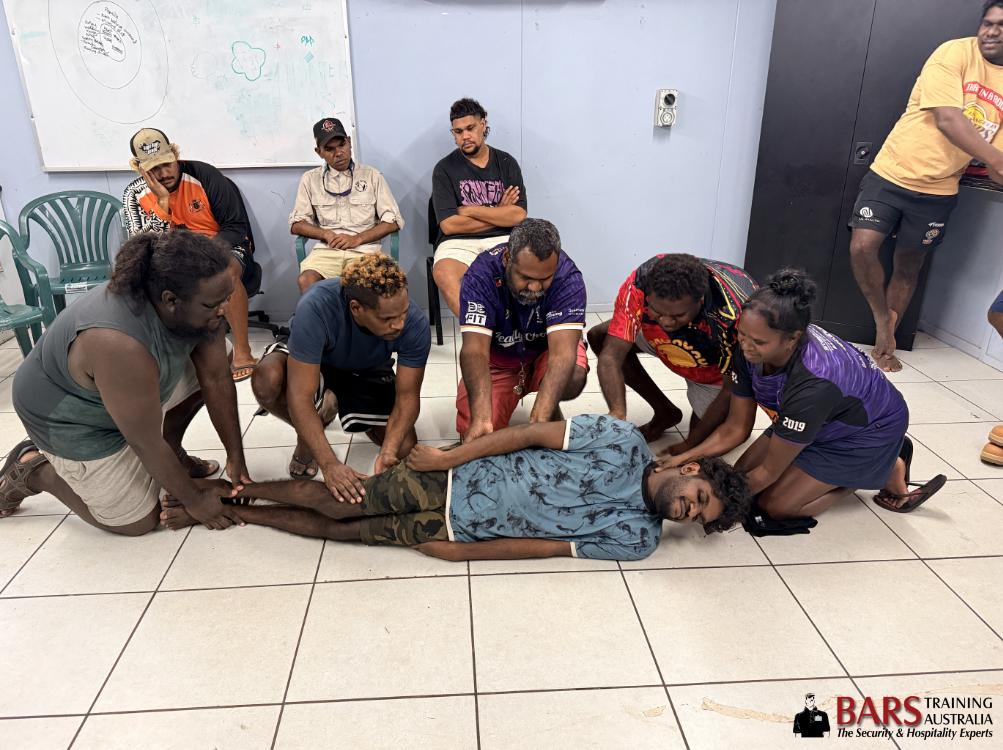
Students must be physically capable of responding to first aid emergency scenarios, including providing CPR to a manikin on the floor. Anyone in a wheelchair or with other disabilities that may impact their participation in these activities should contact us to discuss their individual circumstances before enrolling.
Certificate Validity
The Nationally Recognised Provide First Aid Certificate (HLTAID011) is valid for 3 years with the Cardio-pulmonary Resuscitation component covered in the Apply First Aid course.
Note: Participants should re-certify in Cardio-pulmonary Resuscitation every 12 months to maintain competency in the skills required in an emergency situation.
Recognition of Prior Learning (RPL)
Recognition of Prior Learning (RPL) is the acknowledgment of skills and knowledge held by an individual as a result of formal training, work experience and /or life experience. If you believe that you already possess some or all of the learning outcomes contained in this course and you can demonstrate current competency, then you can apply for RPL. To register for RPL you simply contact BARS Training Australia on (07) 5529 0834 during office hours or alternatively complete your online application indicating that you wish to apply for RPL and one of our staff will contact you.
Enrolments
Enrolment occurs through online registration and payment of course fees. Your details are captured and stored securely, with the results of your training being linked to this enrolment information.
Refunds
All requests for refunds are to be made in writing on a Refund Request this form that needs to be accompanied by supporting documentation where applicable. This form can be obtained by contacting the BARS Training Australia on (07) 5529 0834 during office hours.
NOTE
Participants are responsible for reading all relevant materials provided on the website including the BARS Training Australia Student Handbook and the information about courses prior to enrolment. Once participants have entered their details on an order form it will be accepted by all parties that they have read the Student Handbook and agree with all the Terms and Conditions prior to commencing their training. Please use the below link for more information and one of our sales representatives will contact you within 2 working days to discuss the program with you.(view handbook)
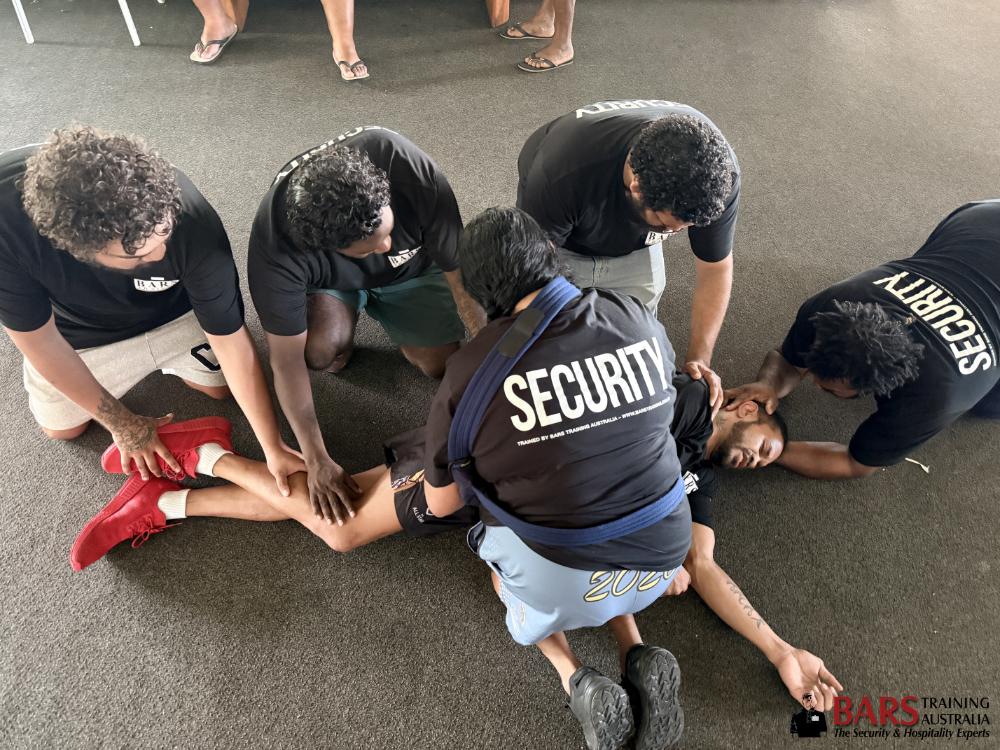
HLTAID014 Provide Advanced First Aid develops advanced first aid skills and knowledge for workplace first aiders, security personnel and others who may be required to manage complex first aid situations. In Queensland, Crowd Controllers and Bodyguards must complete specified ongoing training every three years, including either HLTAID011 Provide First Aid or HLTAID014 Provide Advanced First Aid, together with applicable security units.
The course provides practical training in advanced first aid responses across a range of emergency situations and workplace environments. HLTAID014 may also contribute towards CPP31318 Certificate III in Security Operations where included in the student’s training program. Separate annual CPR training requirements may also apply to Queensland security licence holders.
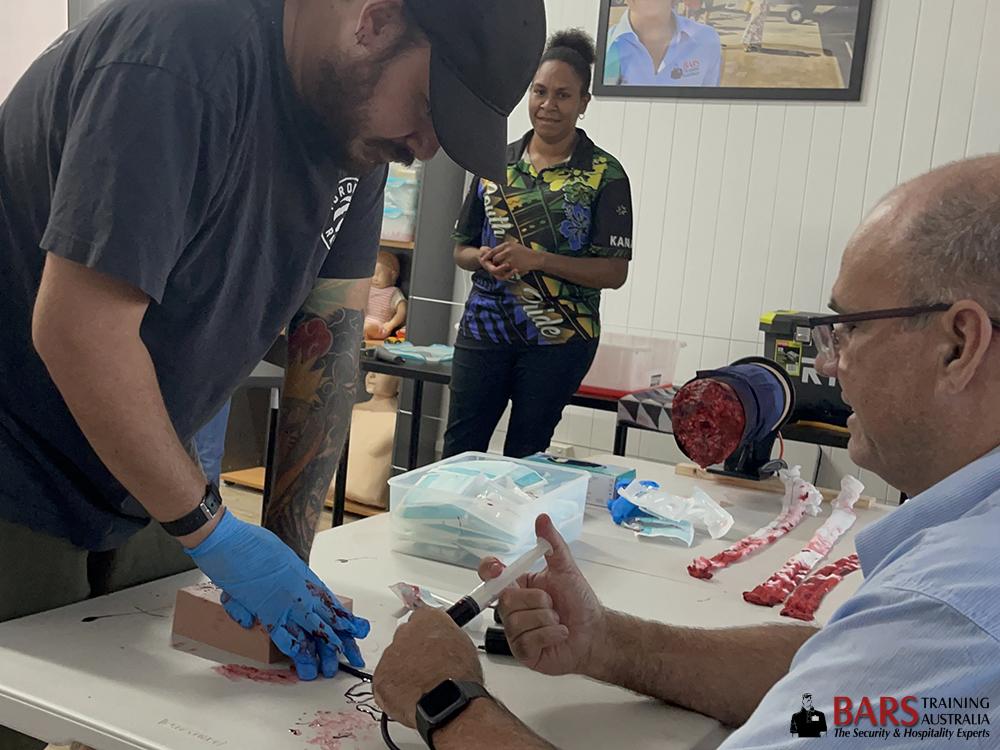
HLTAID014 Provide Advanced First Aid is designed for people who may be required to provide an advanced first aid response and manage an incident until medical or other assistance arrives. The course is particularly relevant to workplace first aiders, security personnel and others who may be required to respond to complex emergency situations. It extends beyond basic first aid by developing the participant’s ability to assess an incident, establish priorities, coordinate available resources and provide an appropriate response where multiple casualties or more complex injuries and illnesses may be involved.
Training develops skills in advanced first aid response, casualty management, coordinating an incident and working with or directing other first aiders. Participants also develop skills in resuscitation, use of appropriate first aid equipment, monitoring casualty conditions and communicating effectively with emergency services and other personnel during an incident.
Practical activities provide opportunities to apply these skills in realistic emergency scenarios and develop confidence in managing first aid incidents in accordance with recognised first aid procedures and Australian Resuscitation Council (ARC) guidelines.

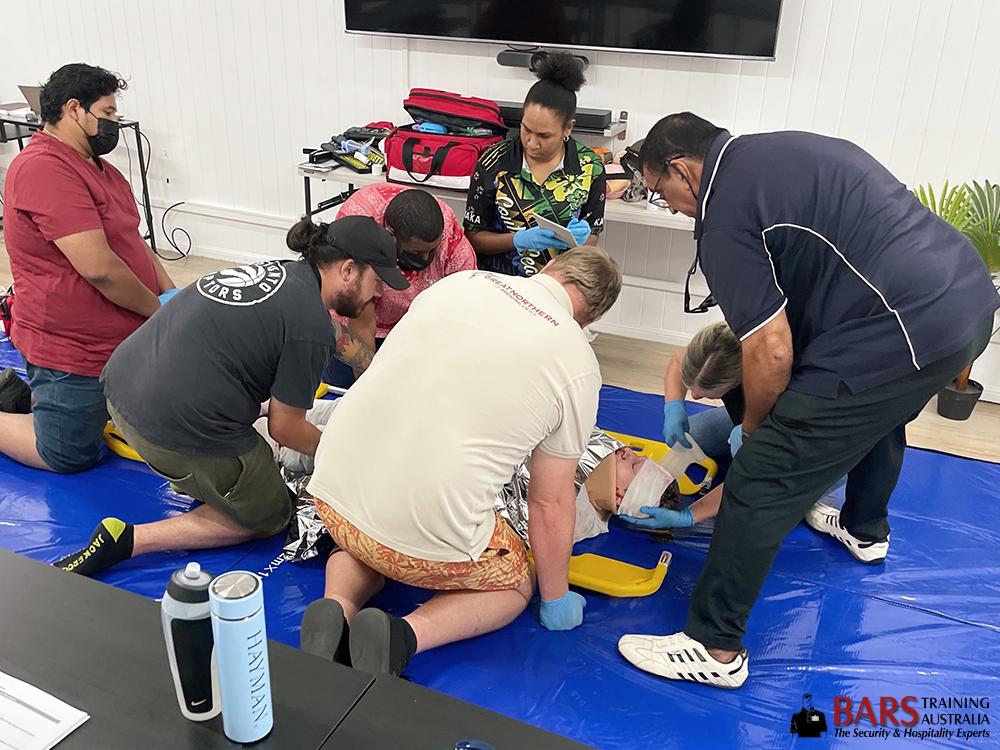
Training has a strong practical focus and includes responding to simulated emergency situations, assessing casualties, providing advanced first aid, managing multiple casualties and coordinating an appropriate emergency response. Participants complete the required knowledge and practical assessment activities and demonstrate their skills using appropriate first aid and emergency response equipment.
Training has a strong practical focus and includes responding to simulated emergency situations, assessing casualties, providing advanced first aid, managing multiple casualties and coordinating an appropriate emergency response. Participants complete the required knowledge and practical assessment activities and demonstrate their skills using appropriate first aid and emergency response equipment.
Practical scenarios are designed to reflect situations that may occur in workplace and community environments. Participants may be required to establish priorities, manage the immediate safety of an incident, communicate with emergency services, monitor casualty conditions and coordinate assistance from other first aiders.
These activities allow participants to apply their knowledge while developing confidence in managing more complex first aid situations. Participants who successfully complete all training and assessment requirements will receive nationally recognised Statements of Attainment for:
HLTAID014 – Provide Advanced First Aid
HLTAID011 – Provide First Aid
HLTAID009 – Provide Cardiopulmonary Resuscitation
Course Fees From $275
To view full course details, select Course Application & Enrolment and enter your preferred training location. Available course dates, fees and location-specific information will then be displayed.
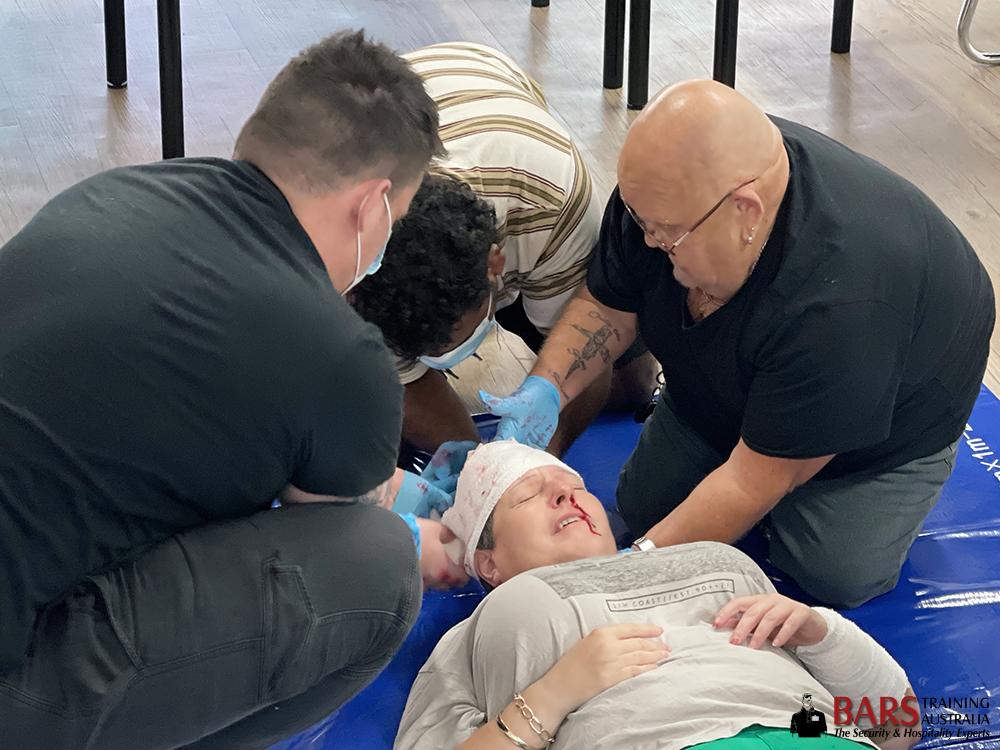
HLTAID014 Provide Advanced First Aid is delivered through a combination of pre-course self-paced learning and two consecutive full days of face-to-face practical training and assessment. Participants are provided with learning resources to complete before attending the scheduled face-to-face training, allowing them to develop the underpinning knowledge required for the advanced practical component of the course.
Pre-course learning introduces relevant first aid principles and provides participants with access to learning resources and study support.
Participants are encouraged to contact BARS Training Australia if they experience difficulty with the pre-course material or require additional learning support or reasonable adjustment.
The face-to-face component has a strong practical focus and includes trainer demonstrations, hands-on exercises, role-plays, simulated emergency scenarios and group activities. Participants practise responding to more complex first aid situations, managing casualties and incidents, working with other first aiders and using appropriate first aid and emergency response equipment.
Participants must successfully complete all required knowledge and practical assessment activities and demonstrate the skills required by the applicable units of competency.
Note: Participants are required to complete the prescribed pre-course learning and attend both consecutive days of face-to-face practical training and assessment.

Participants must be able to demonstrate advanced first aid skills individually in realistic scenarios and simulations that reflect the requirements of the units of competency.
Practical training and assessment includes activities conducted at floor level, including demonstrating CPR on a manikin in accordance with the required assessment conditions.
Participants must have sufficient language, literacy, numeracy and digital skills to complete the learning and assessment activities. BARS Training Australia assesses these requirements prior to enrolment and can provide appropriate learning support and reasonable adjustment where required.
Participants who may require assistance or adjustment to participate in practical activities are encouraged to discuss their individual requirements with BARS Training Australia before enrolment. Reasonable adjustment will be considered where appropriate; however, adjustments cannot remove or alter the essential requirements of the units of competency.
Participants under 18 years of age are required to provide consent from a parent or legal guardian.
Recognition of Prior Learning (RPL)
Recognition of Prior Learning acknowledges relevant skills and knowledge gained through previous training, employment or other experience. Participants who believe they can demonstrate the required current competency may apply for RPL. RPL requires sufficient, valid, authentic and current evidence and is subject to assessment by BARS Training Australia.
Where training is being undertaken to satisfy a Queensland security licensing or ongoing training requirement, participants should be aware that separate regulatory requirements may apply to the recognition or acceptance of training. The Queensland Office of Fair Trading determines licensing requirements and whether training evidence is acceptable for licensing purposes.
Enrolment and Refunds
Applicants are required to complete the BARS Training Australia online enrolment process. Relevant course information, fees, training arrangements and participant requirements are provided before enrolment is confirmed.
Refunds are managed in accordance with the BARS Training Australia Refund Policy and applicable Terms and Conditions. Participants should review the course information and BARS Training Australia Student Handbook before enrolment for information about training and assessment, student support, reasonable adjustment, complaints and appeals, refunds and participant rights and responsibilities. (view handbook)

HLTPAT010 Collect Specimens for Drugs of Abuse Testing develops the skills and knowledge required to prepare for and conduct drug and alcohol specimen collection in accordance with applicable procedures, testing requirements and relevant standards. Participants learn to confirm collection requirements, prepare individuals and equipment, follow appropriate collection procedures, and collect specimens using urine and oral fluid testing methods for drugs of abuse and breath testing methods for alcohol.
Training has a practical focus and is relevant across a range of industries and environments. Employment opportunities may include roles involving drug and alcohol testing at mine sites, transport and logistics operations, industrial workplaces, occupational health services and other organisations where drug and alcohol testing programs are implemented.
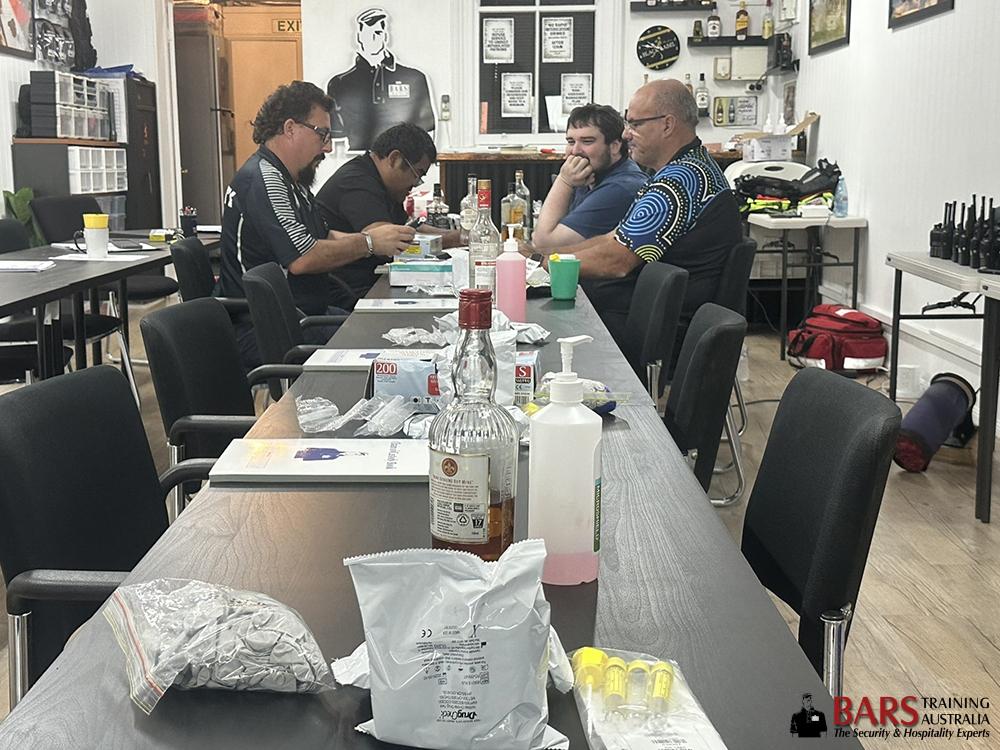
HLTPAT010 Collect Specimens for Drugs of Abuse Testing applies to people working in collection centres, occupational health services, healthcare environments and workplaces where drug and alcohol testing is conducted.
Training develops the knowledge and practical skills required to conduct specimen collection correctly, maintain specimen integrity and prepare specimens for confirmatory laboratory testing where required.
The course covers drug types and their effects, applicable Australian Standards and testing requirements, drug and alcohol testing methods, arranging and preparing for a collection, testing equipment, infection control and safety procedures, chain of custody, specimen integrity and confirmatory laboratory testing.
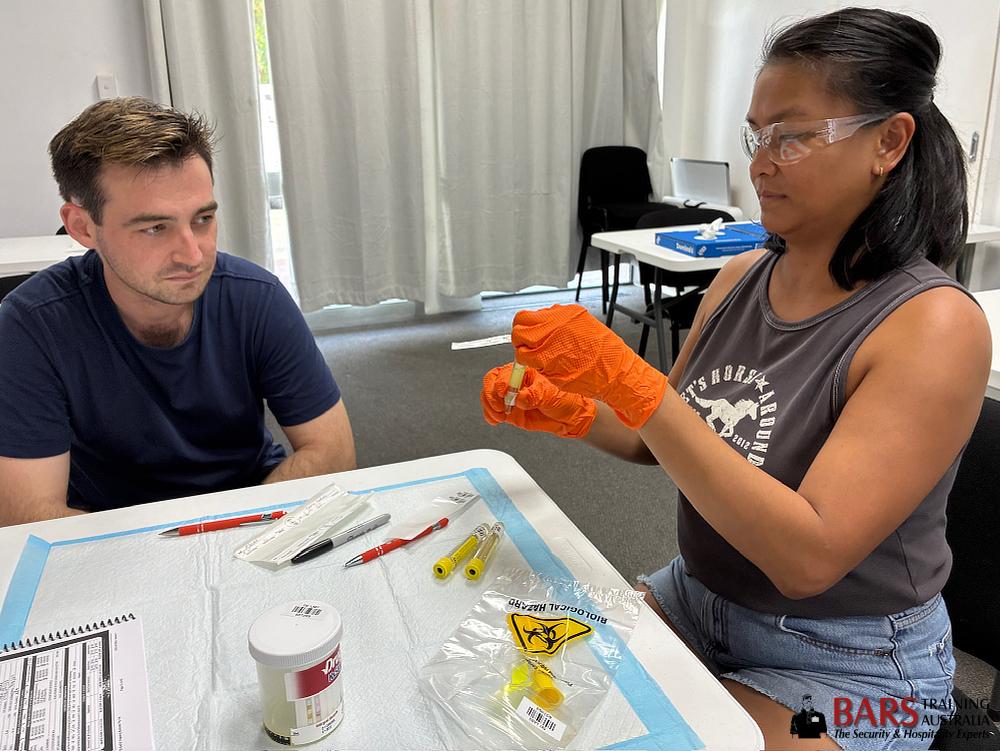
Participants develop practical skills in collecting urine and oral fluid specimens and conducting and recording breath alcohol tests using appropriate testing equipment.

Training has a strong practical focus and requires participants to apply established collection, infection control, safety, documentation and chain-of-custody procedures. Participants practise conducting drug and alcohol testing, maintaining specimen integrity, completing required documentation and preparing specimens for transportation and laboratory confirmation where applicable.
To successfully complete HLTPAT010, participants must satisfy the performance evidence requirements, including the required specimen collection and testing activities involving at least two different individuals.
Participants may therefore be asked to provide a urine, oral fluid or breath sample to support practical assessment activities involving other participants. Personal information associated with training and assessment activities is managed in accordance with the BARS Training Australia Privacy Policy. (view privacy policy)
Participants who successfully complete all training and assessment requirements will receive a nationally recognised Statement of Attainment for:
HLTPAT010 – Collect Specimens for Drugs of Abuse Testing
Course Fees From $580
To view full course details, select Course Application & Enrolment and enter your preferred training location. Available course dates, fees and location-specific information will then be displayed.
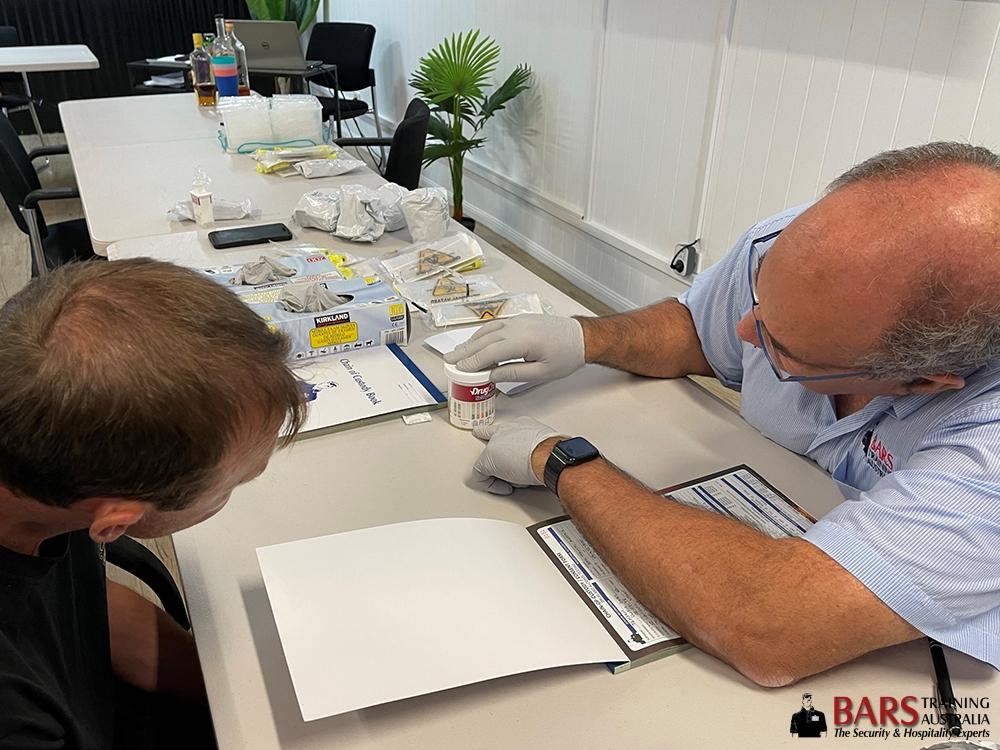
HLTPAT010 Collect Specimens for Drugs of Abuse Testing is delivered through one full day of face-to-face group training and assessment. Participants are required to attend and actively participate for the full duration of the course to receive the required instruction, practical training and opportunity to demonstrate competency.
During the session, participants complete the required underpinning knowledge and practical assessment activities and participate in trainer demonstrations, practical exercises, simulated workplace scenarios and group activities. Training includes preparing for specimen collection, following infection control and safety procedures, maintaining specimen integrity, completing documentation and applying appropriate chain-of-custody procedures.
The unit requires participants to demonstrate established technical, infection control and safety procedures, together with applicable testing requirements, during specimen collection and testing activities involving at least two different individuals. Practical assessment therefore requires interaction with other participants and the collection and processing of appropriate specimen types in accordance with the assessment requirements.
As each participant must complete the required practical activities involving at least two different individuals, a minimum number of participants is required for scheduled training sessions to proceed.
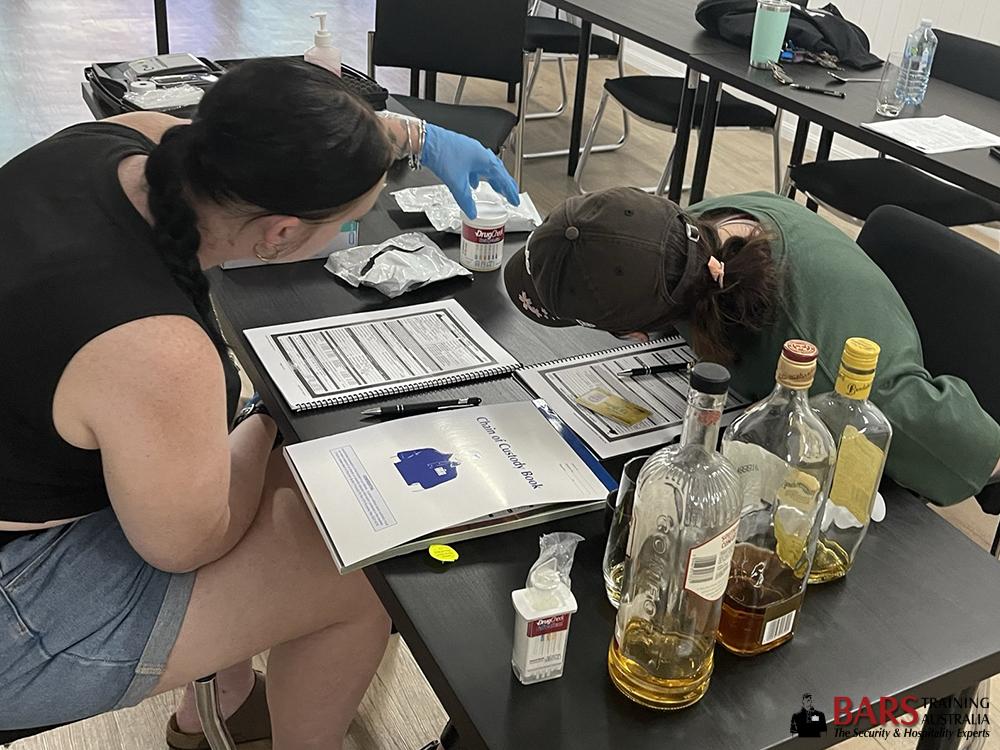
There are no formal training prerequisites for HLTPAT010 Collect Specimens for Drugs of Abuse Testing. Participants require sufficient language, literacy, numeracy and digital skills to understand testing procedures, follow instructions, complete required documentation and participate in the knowledge and practical assessment activities.
BARS Training Australia assesses these requirements prior to enrolment and can provide appropriate learning support and reasonable adjustment where required.
Participants must be prepared to undertake practical specimen collection and testing activities and satisfy the performance evidence requirements of the unit, including the required activities involving at least two different individuals. Participants may be asked to provide a urine, oral fluid or breath sample to support practical assessment activities involving other participants.
Personal information associated with training and assessment activities is managed in accordance with the BARS Training Australia Privacy Policy. (view privacy policy)
Recognition of Prior Learning (RPL)
Recognition of Prior Learning acknowledges relevant skills and knowledge gained through previous training, employment or industry experience. Participants who believe they can demonstrate the required current competency may apply for RPL. RPL requires sufficient, valid, authentic and current evidence and is subject to assessment by BARS Training Australia.
Participants can indicate their interest in RPL during the online application process or contact BARS Training Australia on (07) 5529 0834.
Enrolment and Refunds
Applicants are required to complete the BARS Training Australia online enrolment process. Relevant course information, fees, training arrangements and participant requirements are provided before enrolment is confirmed.
Refunds are managed in accordance with the BARS Training Australia Refund Policy and applicable Terms and Conditions.
Participants should review the course information and BARS Training Australia Student Handbook before enrolment for information about training and assessment, student support, reasonable adjustment, complaints and appeals, refunds and participant rights and responsibilities. (view handbook)

Cash-in-transit security involves the secure collection, handling, transportation and delivery of cash, bullion, jewellery and other valuables. This training develops the skills and knowledge required to prepare for cash-in-transit operations, follow security procedures, inspect equipment and safely manage the collection, transfer and delivery of cash and valuables in secured and unsecured environments.
The training is suitable for security personnel seeking specialised cash-in-transit skills and related security roles. Practical activities focus on maintaining security, applying operational procedures, managing identified risks and responding appropriately to situations that may arise while transporting valuables. Units successfully completed through this training may also provide credit towards the CPP31318 Certificate III in Security Operations.
Course Outline
This training develops the practical skills and knowledge required to securely collect, transfer and deliver cash and valuables while conducting cash-in-transit operations.
Training covers inspecting and testing cash-in-transit security equipment, implementing security procedures, preparing for operations and safely loading and unloading cash and valuables in both secured and unsecured environments.
The following units of competency are included:
- CPPSEC3118 – Inspect and test cash-in-transit security equipment
- CPPSEC3119 – Implement cash-in-transit security procedures
- CPPSEC3120 – Load and unload cash-in-transit in secured and unsecured environments
These units may provide credit towards CPP31318 Certificate III in Security Operations.
Participants who successfully complete all training and assessment requirements will receive a nationally recognised Statement of Attainment for the units completed. Additional licensing and training requirements apply to security officers who carry firearms while performing security duties in Queensland. Firearms licensing is administered separately by the relevant Queensland licensing authority.
Course Fees From $250
To view full course details, select Course Application & Enrolment and enter your preferred training location. Available course dates, fees and location-specific information will then be displayed.

Course Duration
This course is delivered through a combination of pre-course self-paced learning and one full day of face-to-face group training and assessment. Participants are required to complete the supplied pre-course learning activities before attending the practical session and must attend and actively participate in the full 8-hour face-to-face training and assessment day.
Pre-course learning provides participants with the underpinning knowledge required to prepare for the practical component of the course. During the face-to-face session, participants apply their knowledge and demonstrate the required cash-in-transit skills through trainer demonstrations, practical activities, role-plays, simulated workplace scenarios, group discussions and assessment activities.
Practical training and assessment includes inspecting and testing cash-in-transit security equipment, preparing for cash-in-transit operations, applying security procedures and demonstrating the safe collection, transfer, loading, unloading and delivery of cash and valuables in secured and unsecured environments. Participants must successfully complete both the required pre-course learning and all face-to-face training and assessment activities to satisfy the course requirements.
Course Requirements
There are no formal training prerequisites for this Cash-in-Transit Skill Set. Participants require sufficient language, literacy, numeracy and digital skills to understand security procedures, follow written and verbal instructions, complete required documentation and participate in the knowledge and practical assessment activities. BARS Training Australia assesses these requirements prior to enrolment and can provide appropriate learning support and reasonable adjustment where required.
Participants are encouraged to review the BARS Training Australia Student Handbook before enrolment. The Handbook provides important information about the training experience, including student support, reasonable adjustment, training and assessment, complaints and appeals, refunds and participant rights and responsibilities. (view handbook)
Participants must be able to participate in practical cash-in-transit activities, role-plays and simulated workplace scenarios and demonstrate the skills required to inspect and test security equipment, implement cash-in-transit security procedures and safely load and unload cash and valuables in secured and unsecured environments.
Recognition of Prior Learning (RPL)
Recognition of Prior Learning acknowledges relevant skills and knowledge gained through previous training, employment or industry experience. Participants who believe they can demonstrate the required current competency may apply for RPL. RPL requires sufficient, valid, authentic and current evidence and is subject to assessment by BARS Training Australia. Participants can indicate their interest in RPL during the online application process or contact BARS Training Australia on (07) 5529 0834.
Where training is being undertaken for occupational licensing purposes, acceptance of training or competency outcomes for licensing is determined separately by the relevant licensing authority.
Enrolment and Refunds
Applicants are required to complete the BARS Training Australia online enrolment process. Relevant course information, fees, training arrangements and participant requirements are provided before enrolment is confirmed. Refunds are managed in accordance with the BARS Training Australia Refund Policy and applicable Terms and Conditions.